 +86-13981905144
 inquiry@chinaroadtrip.org
Compare routes, travel time and essential preparations
Written by China Road Trip | Updated 2026-10-9

Planning a Tibet road trip or motorcycle journey? You'll likely face one key decision: travel overland from Yunnan, or fly to Lhasa and start your road trip there. The right choice depends on how much time you have, what you want to see, and how many days you're willing to spend driving or riding.
Choose Your Starting Point Based on Time and Destinations
Here are three questions to help you decide:
First, is Yunnan on your must-see list? If you want to visit Dali, Lijiang, Shangri-La, and see Meili Snow Mountain, the overland route through Yunnan is a trip in itself. If you've already been to Yunnan, or you'd rather spend your time inside Tibet, flying to Lhasa is more efficient.
Second, how many days do you have? What matters is which route you choose and whether the itinerary fits your schedule.
Third, where in Tibet do you most want to go? A trip focused on Lhasa and Yamdrok Lake is very different from one that includes Everest Base Camp and Gyirong.
| Your travel goal | Suggested itinerary |
| Travel from Yunnan all the way to lhasa, with a visit to Yamdrok Lake | 12-Day Yunnan-Tibet Overland Route |
| Yunnan to Lhasa, then continue to Everest Base Camp and Gyirong | 15-Day Yunnan-Tibet-Everest-Gyirong Extension |
| Start from Lhasa, visit Everest Base Camp and Namtso | 8-Day Lhasa Departure Route |
Overland from Yunnan: How Do the Two Routes Work?
Route A: 12-Day Kunming–Lhasa Yunnan–Tibet Route
 |
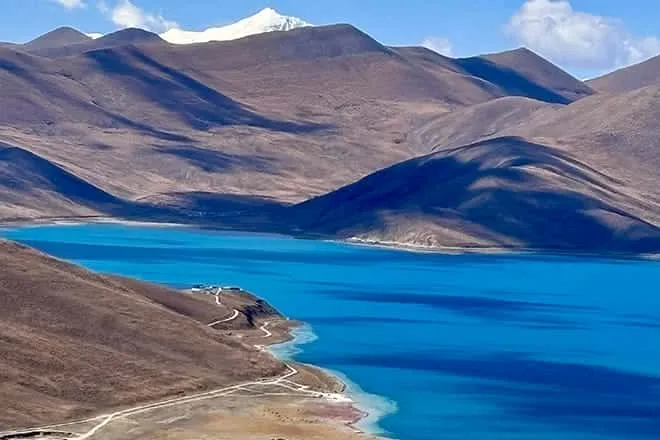
This route starts in Kunming, passes through Dali, Lijiang, Shangri-La, and Deqin before entering Tibet, then continues through Markam, Zuogong, Rawu, and Nyingchi to Lhasa, with a visit to Yamdrok Lake near the end of the trip.
Here is how the 12 days are arranged:
| Day | Itinerary |
| Day 1 | Arrive in Kunming, trip preparation |
| Day 2-4 | Kunming via Dali to Lijiang, then on to Shangri-La and Deqin |
| Day 5-8 | Enter Tibet from Deqin, via Markan, Zuogong, Ranwu to Nyingchi |
| Day 9 | Nyingchi to Lhasa |
| Day 10 | Lhasa city sightseeing |
| Day 11 | Yamdrok Lake visit |
| Day 12 | Depart Lhasa |
One important thing to note: There are plenty of places worth spending more time in along the Yunnan–Tibet route, but the 12-day framework leaves limited time for extended stays. For a more leisurely stay in Dali or Lijiang, allow extra days before the tour or discuss an adjusted itinerary.
About vehicle handover: The featured itineraries start in Kunming. If you prefer to start in Dali or Lijiang, contact us in advance to check vehicle availability, handover arrangements and driving-permit requirements.
For full itinerary details, see: 12-Day Kunming–Lhasa Yunnan–Tibet Route.
Route B: 15-Day Yunnan–Tibet–Everest–Gyirong
The two itineraries follow a similar route from Kunming to Lhasa. The difference is what happens after Lhasa.
The 12-day route covers the overland journey from Yunnan to Lhasa, plus Lhasa city and Yamdrok Lake. The 15-day route continues west:
 |
Lhasa → Yamdrok Lake → Gyantse → Shigatse → Everest Base Camp → Gyirong → Shigatse → Lhasa Airport
This itinerary suits travelers who want to combine the journey through Yunnan and eastern Tibet with an onward trip to Everest Base Camp and Gyirong.
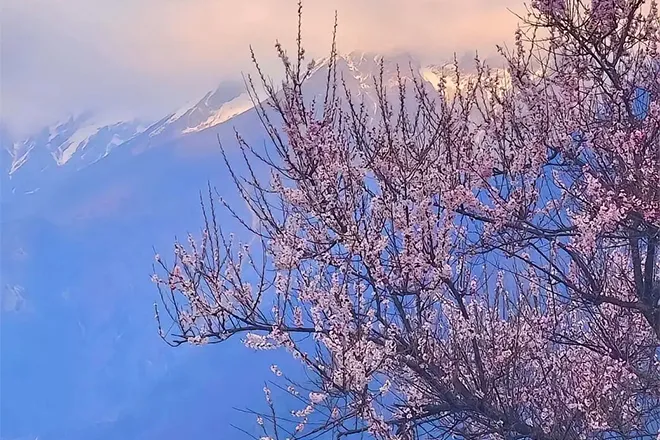
Spring departures pass through the Nyingchi peach blossom area. Peach blossoms are a seasonal experience—whether the same route can be arranged in other months, and whether sights, accommodation, or daily itineraries need adjusting, should be confirmed based on your specific travel dates.
For route details, daily arrangements, and vehicle handover, see: 15-Day Yunnan–Tibet–Everest–Gyirong Extension.
Starting from Lhasa: What Road Routes Are Available?
If you decide to start from Lhasa, you can choose our 8-day Lhasa–Everest–Namtso trip by car or motorcycle.
Lhasa → Yamdrok Lake → Gyantse → Shigatse → Tingri → Everest Base Camp → Dingkye → Shigatse → Siling Tso → Baingoin → Namtso → Lhasa
The main difference between the two options is the driving experience and support. On a self-drive tour, you drive the car with the guide traveling in your vehicle. On a motorcycle tour, you ride with a guide, and our tours include a support vehicle. For daily details, see the individual products:
 |
· 8-Day Lhasa–Everest Base Camp–Namtso Self-Drive
 |
· 8-Day Lhasa–Everest Base Camp–Namtso Motorcycle
Before departure, check when vehicle handover and any required driving-permit appointments take place. Discuss whether you should arrive earlier or allow extra rest time, based on your health, how you respond to altitude and the demands of the itinerary.
What to Confirm Before Booking Flights and Vehicles
If you're a foreign traveler, your first step isn't booking flights—it's confirming entry and Tibet travel permits.
For foreign visitors, whether entering overland from Yunnan or flying to Lhasa, travel within the Tibet Autonomous Region must be arranged in advance through a qualified travel agency, including route, required permits, and guide. Driving or riding the vehicle yourself does not mean you can travel independently in Tibet.
Travel permits: The Tibet Travel Permit and any other permits required by your route should be arranged in advance through a travel agency. Required documents and preparation time depend on the specific itinerary. Before purchasing non-refundable transportation tickets, confirm the permit arrangements.
 |
Driving eligibility: Foreign visitors planning to self-drive or ride a motorcycle in China need to confirm in advance the requirements for their overseas driver's license, vehicle category, and China's temporary driving permit. For short stays, a temporary driving permit valid for three months can be applied for; for stays exceeding three months, validity can be extended to one year, subject to approval by the issuing authority.
 |
Vehicle options and handover: We can arrange a rental car or motorcycle for you to drive or ride, or help you plan the trip with your own vehicle. If you bring a foreign-registered vehicle into China, we can assist with the required temporary vehicle-entry procedures, driving documents and Tibet travel permits. These arrangements need to be confirmed in advance based on your vehicle, entry point and itinerary.
 |
The featured itineraries start in Kunming. If you prefer to start in Dali or Lijiang, contact us in advance to confirm vehicle availability, handover arrangements and driving-permit requirements.
Last-day connections: Vehicle return and airport transfers must leave enough time for flight check-in. If you need to get from Shigatse back to Lhasa Airport on the last day, work out the timing before booking flights.
Travel dates: What season suits your chosen route? The Yunnan–Tibet route in rainy season needs buffer time for landslides and detours. The Everest Base Camp section in winter requires confirming road conditions and accommodation availability.
Confirm these arrangements together before making separate bookings. We can help coordinate permit applications, vehicle handover and the itinerary around your arrival and departure plans.
High-Altitude Driving and Riding: What to Consider on the Road
Overland journeys from Yunnan to Tibet, as well as road trips within Tibet, involve high elevations, long stretches of mountain roads and changing weather. Rain, low temperatures, strong winds or snow can affect the journey. Road construction and temporary traffic controls may also increase travel times, so distance alone does not tell you how demanding a day of driving or riding will be.
When planning each day, consider driving time, the altitude of each overnight stop and sightseeing plans together. On longer mountain-road days, limit sightseeing stops, schedule regular breaks and allow flexibility for weather or road delays. Motorcycle itineraries also need to account for exposure to wind, rain and cold, as well as physical fatigue, so driving-time estimates for cars may not suit riders. Traveling overland does not guarantee that you will avoid altitude sickness. If you feel unwell, tell your guide promptly rather than pushing yourself to continue driving or riding.
We plan each day around our guests’ needs and conditions along the route, and monitor weather and road information before departure and throughout the trip.
A professional bilingual guide accompanies you throughout the journey, including both the Yunnan and Tibet sections. On self-drive tours, the guide travels in your vehicle and helps with navigation, local communication and coordination. On motorcycle tours, the guide rides with you, and a support vehicle accompanies the group.
If weather, road conditions or a guest’s health change, our team will assess whether departure times, stops, accommodation or the route need to be adjusted. Route changes remain subject to permit requirements and local restrictions.
12 Days, 15 Days, or 8 Days: Where Does the Time Go?
Use the advertised itinerary length as a starting point, then check whether your travel to Kunming or Lhasa fits the scheduled arrival day and whether your onward flight fits the departure arrangements. Allow additional time for international connections, any necessary appointments and extra rest or sightseeing outside the itinerary.
The main difference is where you spend your time: the Yunnan itineraries include the journey into Tibet, while the Lhasa itinerary concentrates on destinations within Tibet.
Which Option Should You Choose?
Choose the Yunnan overland route if the journey through Yunnan and eastern Tibet is an important part of your trip. Start in Lhasa if you would rather focus your available time on destinations within Tibet.
Share your travel dates, group size, available days and preferred destinations with us, and we can help you choose an itinerary and coordinate the arrangements.
Ask a Quick Question & Free Enquiry

If you have a WhatsApp, please feel free to scan our WhatsApp code.