 +86-13981905144
 inquiry@chinaroadtrip.org
Can you drive or ride in Tibet in winter?
Written by China Road Trip | Updated 2026-9-23

Yes — but winter is not the relaxed, easygoing travel season many people imagine. It suits travellers who already have experience, have plenty of flexibility with their time, and can accept changes to their route at short notice.
For international travellers, there is a more fundamental rule: foreigners cannot travel independently within the Tibet Autonomous Region (TAR). Whether you choose a self-drive trip or a motorcycle tour, a travel agency must arrange your vehicle, route, permits and local guide in advance. The difference between the two is how much control you have over the vehicle itself — not whether you can go it alone.
What Winter Is Like in Tibet?
Winter in Tibet generally runs from November through March. The main characteristics are clear:
High-altitude areas can be extremely cold. In towns such as Lhasa and Shigatse, there may be sunshine and a relatively comfortable feel during the day, but temperatures often drop below freezing at night. Mountain passes and remote high-altitude areas are much colder. Day-to-night temperature changes can be significant.
Ice and snow at high altitude. Early morning and late evening are when black ice is most likely to form, especially on shaded slopes, bridge decks and curves. Snowfall, temporary road closures or traffic restrictions can occur at mountain passes.
 |
Strong wind, intense UV and dry air. Even in winter, the sun is intense and the air is extremely dry. Wind at the passes can be fierce.
Fewer tourists, fewer services. Towns and popular scenic areas see far fewer visitors. Some hotels and restaurants in smaller towns may reduce their operations. Winter is usually the off-season for tourism in Tibet, and prices for some accommodation and travel services may be more flexible.
Winter Road Conditions: What to Expect
Not all roads are the same in winter. The risk depends largely on where you are and when you drive.
Around towns and on some main roads, conditions may remain passable when the weather is stable. But winter road conditions cannot be judged by sunshine alone. Black ice can still appear on shaded slopes, bridge decks, curves and high-altitude sections.
 |
When crossing high-altitude sections such as Gamba La Pass in winter, pay particular attention to shaded curves, bridge decks, and possible icing in the early morning and evening.
After snowfall, snow accumulation or road icing, temporary traffic controls or clearance operations may be put in place.
In remote areas, the distances between petrol stations, repair shops, medical help and supplies are long. Don't take chances by letting your fuel tank run nearly empty or setting out with a faulty spare tyre.
Driving or riding at night is not recommended. Ice forms more easily after dark, visibility drops, and help may take longer to reach you.
Self-Drive vs Motorcycle Touring in Winter
This is the most important comparison in this article.
 |
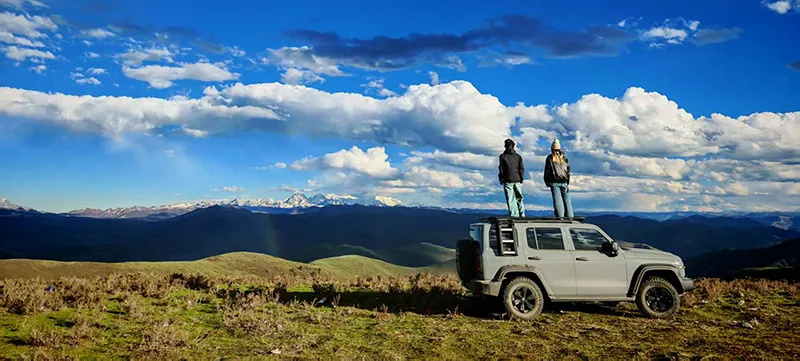
Self-drive is relatively more suitable for winter. A vehicle gives you warmth, wind protection and space to carry emergency supplies. You can bring more clothing, food, water and a full emergency kit without worrying about weight distribution on two wheels.
 |
Motorcycle touring in winter is significantly more difficult. Low temperatures, crosswinds, snow or ice, and numb hands can all directly affect braking, steering and vehicle control. For anyone without high-altitude or winter riding experience, Tibet is not a suitable destination for a first winter motorcycle trip.
Which Winter Routes Are More Realistic
No route is guaranteed. The following are relatively easier options to manage.
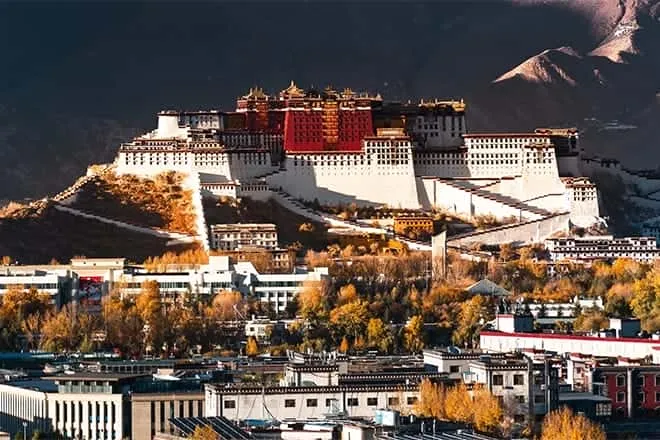
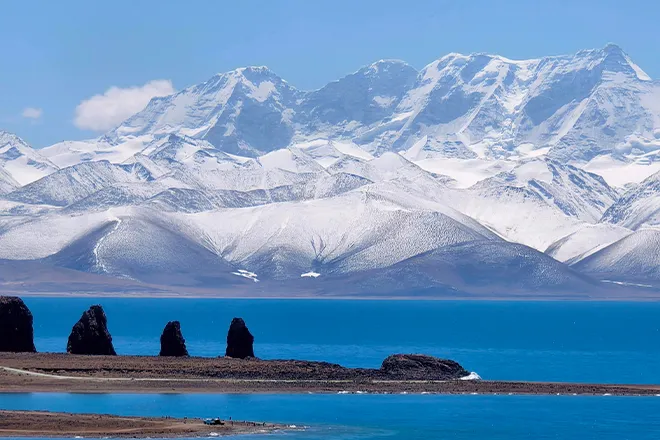
Lhasa and surroundings: cultural routes. The route from Lhasa to Yamdrok Lake and on to Shigatse can be a more manageable winter option. Road sections may remain passable when the weather is stable, but you still need to watch for black ice at passes and on shaded curves. This route can be adjusted according to the weather without abandoning the whole trip.
- 8-Day EBC-Ali Self-Drive Tour: Lhasa, Shigatse & Namtso
- 8-Day Lhasa-Everest & Namtso Motorcycle Pilgrimage
Towards Nyingchi. Some areas of Nyingchi are at relatively lower altitude, and the winter feel may be milder. However, you may still encounter snowfall, ice or temporary traffic adjustments when crossing mountain passes. Before departure, confirm the actual operating status of accommodation, fuel and repair services along the way.
- 9-Day Peach Blossom Spring Self-Drive: Lhasa to Bomê
- 11-Day G318 Peach Blossom Festival Tibet Journey
- 15-Day Yunnan-Tibet & Everest Heavenly Road Moto Tour
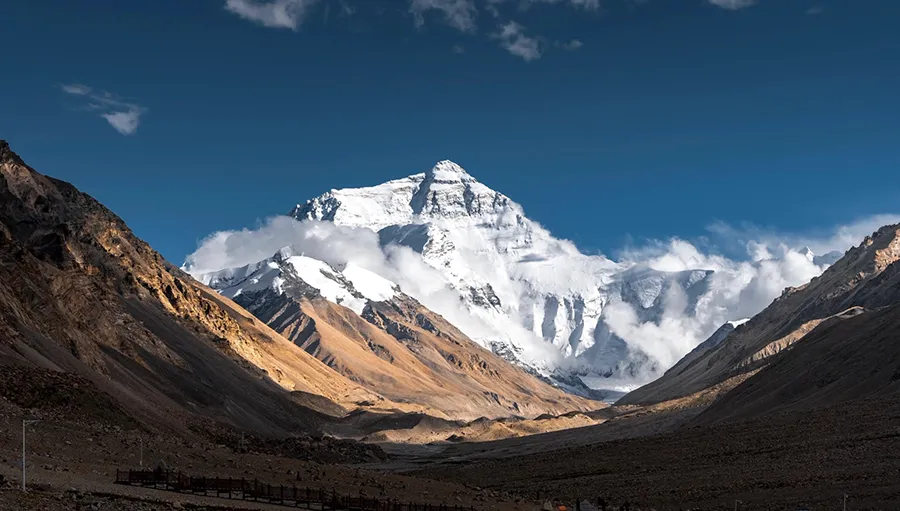
Everest, Ngari, G109, G219. These routes are at higher altitude, cover longer distances and carry greater uncertainty in winter. Whether you can enter the Everest region, Ngari or reach a specific viewpoint depends on the day's weather, road management requirements and your approved itinerary.
- 14-Day Ali Northern Line Motorcycle Self-Driving Tour
- 11-Day G109 Qinghai-Tibet Sky Road Self-Drive: Qinghai Lake to Everest
- 13-Day G219 Xinjiang-Tibet Highway Ultimate Off-Road
Your final route should be confirmed with your travel agency based on current weather and road conditions. Treat any itinerary as tentative.
Permits, Guides and Vehicle Arrangements for Foreign Travellers
For international travellers, the administrative side is non-negotiable.
 |
Tibet Travel Permit (TTP). All foreign travellers entering the Tibet Autonomous Region must hold one. Travel agencies usually apply on your behalf based on your passport, valid entry or residence documents for China, and your confirmed itinerary.
Additional permits. Travel to Everest, Ngari and other restricted or border areas usually requires additional travel and border-related permits. The documents required, application materials and processing time depend on the final route, and your travel agency should verify them item by item once the itinerary is confirmed.
 |
Temporary Chinese driving permit. If you plan to drive yourself, the travel agency can help confirm the materials and book the processing appointment. However, applicants usually need to apply in person at the local traffic management department for a temporary motor vehicle driving permit. The permitted vehicle type must match both your foreign driving licence and the actual vehicle.
Travel agency arranges vehicle, route and guide. Foreign tourists entering Tibet must have their itinerary, permits and guide arranged in advance through a travel agency. The agency will coordinate these arrangements and provide a licensed local guide to accompany you throughout the trip.
Before booking non-refundable flights or hotels, first confirm that your itinerary and permits are feasible. If a route is closed or permits cannot be issued in time, you need the flexibility to adjust your plans.
Essential Winter Vehicle Preparation
- Self-drive
- · Mechanical checks: tyres (tread and condition), brakes, battery, antifreeze, lights, wipers, heating system.
- · Rescue and repair: spare tyre, tyre repair tools, portable air pump, tow rope, basic tools.
- · Emergency supplies: warm clothing, hot water in a thermos, high-calorie food, thermal blanket, power bank, offline maps.
- Motorcycle touring (in addition to the above)
- · Riding gear: windproof and insulated riding suit, heated gloves or heated grips, spare gloves, waterproof boots.
- · The motorcycle itself: make sure it is in good mechanical condition before departure. Batteries and engines are harder to start at low temperatures.
Altitude and Cold-Weather Safety
The combination of low temperatures, dry air, fatigue and high altitude in winter makes it harder for the body to adapt, so the risk of altitude sickness should not be ignored.
After arriving in Lhasa, spend a day or two acclimatising before gradually moving to higher and more remote areas. Don't start a long journey as soon as you arrive.
Know the warning signs. Worsening headache, persistent vomiting, and difficulty breathing at rest are all signals to stop ascending, seek medical help or descend immediately.
Don't push through snow, ice, strong winds or low visibility. Turning back or waiting for a weather window is the right decision, not a failure.
Build buffer days into your itinerary. Winter weather may close a pass for a day or force you to change route. A flexible schedule is a safety feature, not a luxury.
What to Wear and Pack
Layering is key:
- Base layer: moisture-wicking thermal underwear.
- Mid layer: fleece or down.
- Outer layer: windproof and waterproof shell.
- Sun protection and skincare: UV-protective sunglasses suitable for high-altitude conditions, high-SPF sunscreen, lip balm, moisturiser.
- Health and comfort: common medicines, first-aid kit, electrolytes, thermos.
- Electronic devices: low temperatures can significantly speed up battery drain on phones and cameras. Bring a power bank, and keep spare batteries close to your body to stay warm.
Is Winter Tibet Right for You?
- Suitable if you:
- √ Have high-altitude experience.
- √ Have a flexible itinerary and can accept route changes.
- √ Prefer quiet snow scenery and off-season travel.
- √ Choose self-drive arranged by a travel agency rather than motorcycle touring.
- Not very suitable if you:
- × Are visiting Tibet for the first time.
- × Have a tightly fixed schedule.
- × Just want to take photos easily and hope for predictable road conditions.
- × Lack winter riding experience but still want to ride a motorcycle.
If you want more stable road conditions, late April to early June, or mid-September to mid-October, are better choices.
FAQs
- Are Tibet's roads open in winter?
Some main roads may remain open when the weather is stable. Snowfall may cause temporary closures or traffic restrictions, especially at mountain passes. Before setting out, confirm real-time conditions through your travel agency.
-
Can foreigners ride motorcycles in Tibet in winter?
Yes, but a travel agency must arrange the required permits, guide and vehicle. Winter riding conditions are harsh, and it is not recommended for inexperienced riders.
-
Do I need snow chains for a winter self-drive trip in Tibet?
Whether snow chains are needed should be confirmed by the vehicle supplier and travel agency based on the season, vehicle type, tyre condition and real-time road requirements. Do not buy or fit snow chains that are not compatible with your vehicle.
-
Can I visit the Everest region in winter?
Some approved itineraries can go there when weather and road conditions allow, but the exact accessible area may vary. Do not treat winter access as guaranteed.
- Will my winter itinerary change because of snow?
Yes. In fact, you should expect it. Adjusting routes because of weather or road closures is normal in winter.
-
Is winter suitable for first-time visitors to Tibet?
Generally, no. If it is your first visit to Tibet, choose a more stable season first. Winter adds another layer of difficulty, and experienced travellers will handle it better.
Summary: The core principle for a winter trip to Tibet is not to stick to a checklist, but to be willing to adjust or cancel the day's plans when the weather, road conditions or your physical condition change.
Ask a Quick Question & Free Enquiry

If you have a WhatsApp, please feel free to scan our WhatsApp code.