 +86-13981905144
 inquiry@chinaroadtrip.org
The Latest Information on Transportation, Documentation, and Self-Drive Routes
Written by China Road Trip | Updated: 2026-03-26

Beijing, as the capital of China, is the top choice for many foreign tourists heading to Tibet. Whether you opt for a flight soaring through the skies or embark on a leisurely journey along the classic Qinghai-Tibet Railway, every moment will be a challenge and transcendence of your own limits. Setting off from the bustling modern metropolis of Beijing to the "Roof of the World"—Tibet, allows your soul to roam freely amidst China's imperial culture and snow-capped mountains. This is not merely a trip; it is an extraordinary experience that traverses time and space, blending nature and culture.
Choosing China Road Trip means you will enjoy a worry-free, safe, and professional self-driving or guided tour experience. Our meticulously planned itineraries, experienced team, and comprehensive service support will ensure that every step of your journey is filled with surprises and peace of mind.
Itinerary Planning Guide
Foreign tourists could make a 1-2 day stopover in Beijing before heading to Tibet. During this initial relaxed phase of the journey, you may visit renowned attractions such as the Forbidden City, the Summer Palace, and the Great Wall, soaking in Beijing's profound historical heritage and cultural charm, and adequately preparing yourselves for the subsequent high-altitude adventure.
After a brief exploration of Beijing, you could proceed to Lhasa, Tibet. Upon arrival, it's advisable to set aside one to two days for acclimatization to the high-altitude environment. During this period, you can visit attractions like Sera Monastery, Jokhang Temple, and the Potala Palace, experiencing Lhasa's religious culture and urban atmosphere at a leisurely pace. Once acclimatized, you will then venture to iconic sites such as Mount Everest, Namtso Lake, and Yamdroktso Lake, immersing yourselves in Tibet's breathtaking natural landscapes. After the tour, you will return to Lhasa, marking the successful conclusion of your Tibet journey.
Why choose our travel agency? The core reason lies in our exclusive Beijing-Tibet self-drive itinerary, supported by an experienced self-drive service team. Familiar with the entire route and high-altitude driving precautions, our team can provide professional, safe, and considerate full-service support to foreign tourists, allowing you to enjoy peace of mind and fully appreciate the unique charms of Beijing and Tibet.
 |
Transportation Options
There are three primary ways to travel from Beijing to Tibet: by air, by train, and by road. These options present significant differences, and I will now explain each one in detail for you.
By Air
Taking a flight is the quickest way to travel from Beijing to Tibet. Typically, there are 2 to 3 flights per day, mainly departing around 8:10 a.m. and 2:55 p.m., with a one-way flight duration of approximately 4.5 hours. The reference fare for economy class ranges from 480to600 (subject to seasonal fluctuations).
 |
By Train
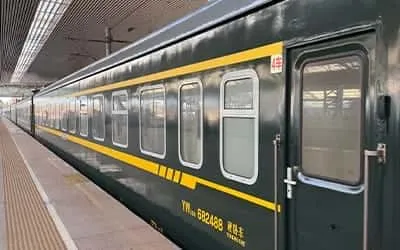
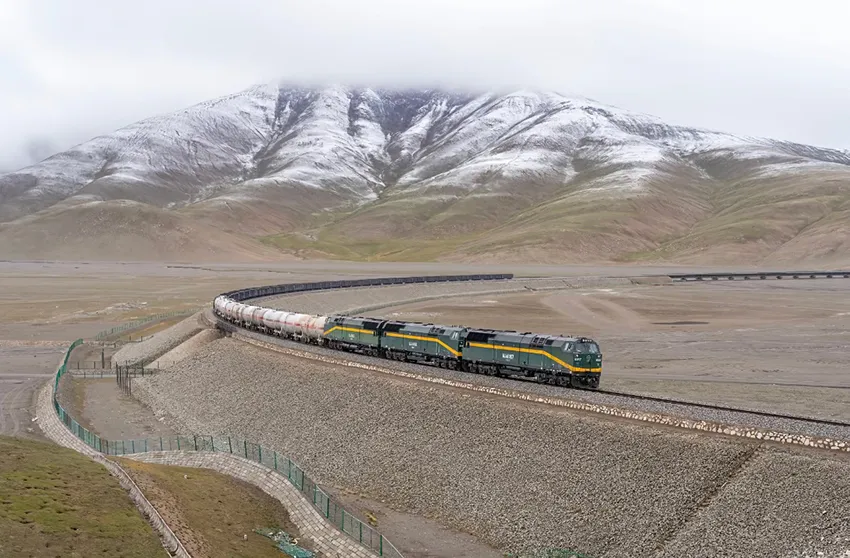
Then there's traveling by train, which offers a completely different experience. Taking the Z21 train from Beijing West Railway Station, which departs at around 8 p.m. every evening, you'll traverse the Hoh Xil No Man's Land and arrive after a long journey of approximately 40 hours. The fare for a hard sleeper ranges from roughly US100 to US160 for a soft sleeper. This route is a classic choice for experiencing the ceremonial sense of traveling to Tibet.
|
By Road
The most classic route for driving from Beijing to Tibet is the "Sichuan-in, Qinghai-out" route: You take National Highway 318 (the Sichuan-Tibet Highway) for the outbound journey and National Highway 109 (the Qinghai-Tibet Highway) for the return trip. The total mileage is approximately 7,000 to 8,000 kilometers, typically requiring 17 to 25 days. If you opt for a one-way drive solely along National Highway 109 (the Beijing-Lhasa Highway, stretching 3,922 kilometers in total), it will take about 10 to 14 days.
This approach places extremely high demands on the vehicle; it is advisable to drive a four-wheel-drive SUV and be equipped with a full set of emergency tools, such as snow chains and air pumps. The road conditions are complex and variable, involving high-altitude passes and sections with frozen soil subsidence along the way, making driving quite challenging.
However, it offers unparalleled breathtaking scenery and an adventurous experience that neither flying nor taking the train can match, making it suitable for travelers with ample time and extensive driving experience.
 |
Air or Train? A Comparison
The advantage of taking a plane lies in its speed and efficiency, as it can save you a significant amount of travel time, allowing you to devote more energy to your trip in Tibet. However, the downside is that flying directly from a low-altitude area to Lhasa, which sits at an elevation of over 3,600 meters, may leave your body lacking time to adapt due to the dramatic altitude change in a short period, making you more prone to altitude sickness.
Train tickets are more economical, with hard-seat tickets costing around 360 yuan, hard-sleeper tickets around 720 yuan, and soft-sleeper tickets around 1,144 yuan. During the journey, you'll have ample time to admire the breathtaking snow-capped mountains and lakes. However, it's important to note that train tickets to Tibet are in extremely high demand, especially during the peak tourist season, and often need to be booked many days in advance.
To sum up, if your travel time is limited, you wish to reach Lhasa as quickly as possible, and you are confident in your body's ability to adapt, then flying is undoubtedly the best choice, as it maximizes your sightseeing time. Conversely, if you place greater value on the travel experience itself, hoping to turn the journey to Tibet into a scenic adventure, or if you are concerned about altitude sickness and want to give your body a gentle adaptation period, then taking the Z21 train would be a wiser and more recommended option.
Essential Document Application
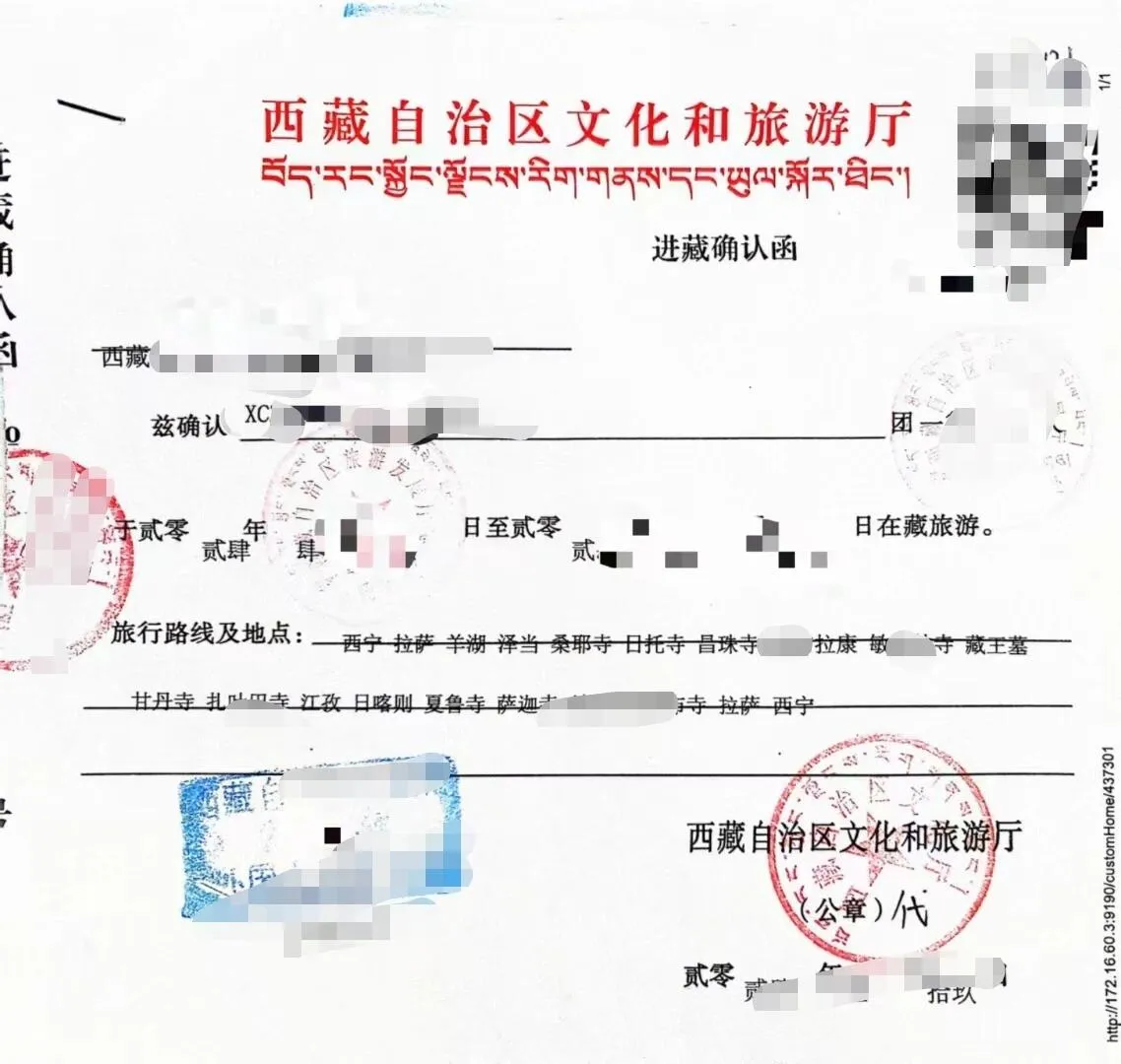
For foreign tourists traveling from Beijing to Tibet, the Tibet Travel Permit is an indispensable core document. It serves as the official permission for foreign nationals to enter the Tibet Autonomous Region and is uniformly issued by the Tibet Autonomous Region Tourism Development Department. Without this permit, foreign tourists will be unable to purchase air or train tickets from Beijing to Lhasa, nor will they be allowed to enter Tibet.
The Tibet Travel Permit cannot be applied for individually; it must be processed through a local travel agency in Tibet that has foreign reception qualifications. Applicants are required to submit a copy of the passport's main page, a valid Chinese visa (except for tourists from visa-exempt countries), and a confirmed itinerary for the Beijing-Tibet journey. For regular itineraries, it is advisable to apply at least 30 days in advance, while during peak seasons or for trips involving border areas such as Mount Everest or Ngari, applications should be submitted 45-60 days in advance.
When departing from Beijing, airports and train stations will verify the original Tibet Travel Permit. It is recommended to make two photocopies as backups. Additionally, foreign tourists must travel in a guided tour group throughout their trip, with the travel agency arranging exclusive guides and vehicles. The itinerary cannot be altered arbitrarily, and the Tibet Travel Permit will be kept by the guide for the duration of the trip and returned to the travel agency for filing after the trip concludes. Furthermore, tourists should ensure that their passports have a validity period of no less than six months and that their visas are still valid to avoid any disruptions to their travel plans.
 |
Recommended Pre-Tibet Tours in Beijing (1-2 Days)
Visit the Forbidden City
The Forbidden City, also known as the Imperial Palace, served as the royal residence for twenty-four emperors during China's Ming and Qing dynasties. The influence of "ritual propriety" and the application of the Yin-Yang and Five Elements theory in its architectural design form the theoretical foundation and fundamental basis for the architectural philosophy of the Forbidden City. The experiences and cultural immersion available to foreign tourists at the Forbidden City are far richer than one might imagine. From basic sightseeing tours to in-depth cultural interactions, the Forbidden City opens a gateway for you to understand China.
Tips: Please note that tickets for the Forbidden City are not sold on the day of visit. All visitors must make a real-name reservation using their passport information through the official "Palace Museum" mini-program seven days in advance, starting at 8 p.m.
|
Visit the Summer Palace
The Summer Palace is a former imperial palace and a vast royal garden of the Qing Dynasty, located in the northwestern part of Haidian District, Beijing, China. Covering an area of 297 hectares, it primarily consists of Longevity Hill and Kunming Lake. Unlike the solemnity of the Forbidden City, the Summer Palace resembles more of a "vacation resort" for the Qing imperial family—blessed with both mountains and water, it exudes a more relaxed and leisurely atmosphere. Foreign tourists here can take a boat ride along the same route that Empress Dowager Cixi once traveled to enter the palace, enjoy the breeze by the lakeside, or seek shelter under the long corridor during rain, experiencing the elegance and tranquility of China's royal gardens.
 |
Watch Peking Opera
Unlike visiting tourist attractions, watching Peking Opera is more akin to an "immersive" cultural experience. Shifting from "sightseeing check-ins" to "cultural immersion," Peking Opera is becoming an essential activity for an increasing number of visitors to Beijing, with some venues even seeing more than a doubling in the number of foreign tourists they receive. While watching, you're no longer just a spectator; you truly become a participant.
 |
Taste Peking Duck
If the Forbidden City and the Great Wall are the calling cards of Beijing, then Peking duck is the city's "culinary signature." For foreign tourists, it is far more than just a dish—it is a cultural experience that blends imperial history, intangible cultural heritage craftsmanship, and a unique sense of ritual. Many foreign visitors list Peking duck as a must-try during their trip to Beijing, with some even exclaiming, "Peking duck is delicious!" while giving a thumbs-up in appreciation.
 |
Can I drive from Beijing to Tibet by myself?
Of course! But there are conditions: Foreign tourists must be accompanied by a qualified travel agency throughout the trip, and the agency will handle all necessary procedures on their behalf.
For the special form of self-driving travel, you need to apply for a Tibet Travel Permit through a travel agency in advance (usually more than 30 days ahead of time), a travel certificate (if traveling via National Highways 318 or 317), and a military region approval letter (since the route passes through areas under military control). Upon arrival in Chengdu, you must also be accompanied by a tour guide to the Vehicle Administration Office to obtain a temporary Chinese driver's license.
Regarding vehicles, you can bring your own car or opt for a regular tourist vehicle with a driver provided by the travel agency (with a license plate starting with "Tibet AL"). However, in either case, a tour guide arranged by the travel agency must accompany you throughout the journey.
China Road Trip is a travel agency that specializes in self-driving tours for foreign visitors, boasting extensive experience in organizing self-driving trips to Tibet. We can handle all the necessary procedures for you, including obtaining the Tibet Travel Permit, temporary driver's license, and military region approval letter, all in one go. Additionally, we provide experienced Tibetan drivers familiar with the road conditions and bilingual (Chinese-English) tour guides to escort you throughout your self-driving journey from Beijing to Tibet, ensuring that your trip is legal, safe, and smooth.
 |
Recommended Routes
20-Day G318 Self-Drive Route Recommendation: Beijing to Tibet
The 20-day self-drive journey from Beijing to Tibet along the G318 is a wonderful expedition that weaves together China's millennia-old history with the breathtaking landscapes of the snowy plateau. Starting from the imperial capital of Beijing, the route heads westward, traversing the heartland of Central China and the land of abundance in Sichuan, before ultimately following the "China's Most Beautiful Scenic Route," the G318, deep into Tibetan territory to reach the sacred city of Lhasa.
Along the way, travelers can unlock a multitude of extraordinary experiences: savor the charm of traditional Chinese architecture in ancient northern cities, listen to the roar of the Yellow River at Hukou Waterfall, and indulge in the leisurely pace of life and spicy Sichuan cuisine in Chengdu. As you enter the G318, marvel at the picturesque beauty of western Sichuan's grasslands, snow-capped mountains, and serene lakes, tackle the classic challenging sections of the Sichuan-Tibet Highway, and relish the ultimate thrill of driving as the altitude gradually rises. Upon arriving in Lhasa, immerse yourself in the profound heritage of Tibetan Buddhism, feel the purest Tibetan faith amidst the crowds of pilgrims circumambulating the temples, and let this journey from the plains to the plateau, from history to spirituality, become an unforgettable memory etched deep in your heart.
 |
 |
Frequently Asked Questions (FAQs)
1. What documents are required for traveling from Beijing to Tibet?
As a foreign tourist, you must apply for a Tibet Travel Permit in advance through a qualified travel agency. This permit is the core legal document required for entering Tibet and typically needs to be processed 30 to 45 days ahead of time. If your itinerary includes border areas or non-open regions such as Mount Everest Base Camp or Ngari, you will also need to obtain an Alien's Travel Permit and military region approval documents in addition.
All these documents must be handled by the travel agency on your behalf; individuals cannot apply for them independently.
2. What are the transportation restrictions for foreign tourists traveling to Tibet?
When foreign tourists take a flight to Tibet, they must present the original Tibet Travel Permit at the airport check-in counter to complete boarding procedures.
When traveling to Tibet by train, a copy of the Tibet Travel Permit is generally acceptable, but it must be presented along with the passport for inspection. When purchasing tickets, it is essential to ensure that the passport information matches exactly with that on the Tibet Travel Permit; otherwise, it may result in being unable to board the plane or train.
Upon arrival in Tibet, all ground transportation must be conducted using official tourist vehicles with license plates starting with "Tibet AL." Foreign tourists are not allowed to rent or drive vehicles on their own.
3. Which scenic spots are off-limits to foreign tourists?
Scenic spots such as the Yarlung Zangbo Grand Canyon, Holy Elephant Gate, Medog, and Lamulin Tso explicitly prohibit foreign tourists from entering. While places like Mount Everest Base Camp and the Ngari region are accessible, foreign tourists need to obtain additional travel permits or military region approval documents and must be accompanied by a tour guide, following designated routes for their activities.
Ask a Quick Question & Free Enquiry

If you have a WhatsApp, please feel free to scan our WhatsApp code.