 +86-13981905144
 inquiry@chinaroadtrip.org
Classic roads, Tibetan culture and Himalayan Adventures
Written by China Road Trip | Updated 2026-10-30

America has Route 66, with its vintage signs, motels and small highway towns. Romania has the Transfăgărășan, its hairpin bends cutting through the Carpathian Mountains. Australia has the Great Ocean Road, following the coast past cliffs and surf. If you are looking for your next self-drive or motorcycle adventure, what does Tibet offer that is different? Here, roads cross the Tibetan Plateau, linking snow-covered mountains, lakes and Tibetan communities. From choosing a route into Tibet to the stops and detours along the way, the appeal of a Tibet self-drive or motorcycle tour unfolds gradually.
Classic Routes for a First Trip to Tibet
Three classic approaches to Tibet are worth considering.
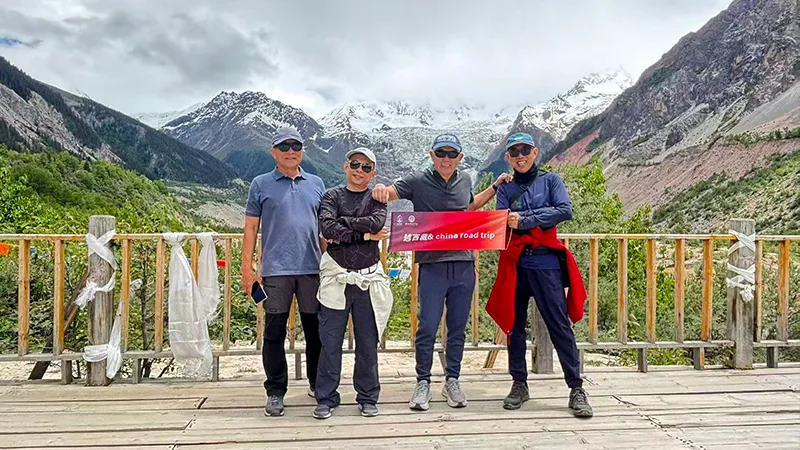
The G318 Sichuan–Tibet route runs from Chengdu to Lhasa and is one of the classic ways into Tibet. It passes through western Sichuan, eastern Tibet and Nyingchi, with high mountain passes, deep river gorges, snow-capped peaks, glaciers and forests appearing in turn. Its appeal lies in how much the scenery changes: you experience high-altitude mountain roads, but also the greener side of Nyingchi, where forests sit alongside villages.
 |
The G214 Yunnan–Tibet itinerary starts in Kunming and heads north through Dali, Lijiang, Shangri-La and Deqin before joining the G318 at Mangkang and continuing to Lhasa. Alongside mountain and gorge scenery, this route brings Yunnan's old towns, the food and architecture of different ethnic groups, and Tibetan monasteries into a single journey — a good choice for travellers who want both nature and culture.
 |
The Xinjiang–Tibet section of G219 connects Yecheng in Xinjiang with Ngari in western Tibet. This section is characterised by high altitude, long distances and sparse settlement. Compared with the Sichuan–Tibet and Yunnan–Tibet routes, it offers a stronger sense of remote plateau wilderness, and can be combined with destinations such as Mount Kailash and Lake Manasarovar. It also demands more preparation in terms of time, altitude acclimatisation and supplies along the way.
 |
Which route you choose depends on your starting point, time and interests. Travellers arriving in Lhasa via the Sichuan–Tibet or Yunnan–Tibet route can stay and explore before extending west as time allows.
Arriving in Lhasa: the Potala Palace and Tibetan Life
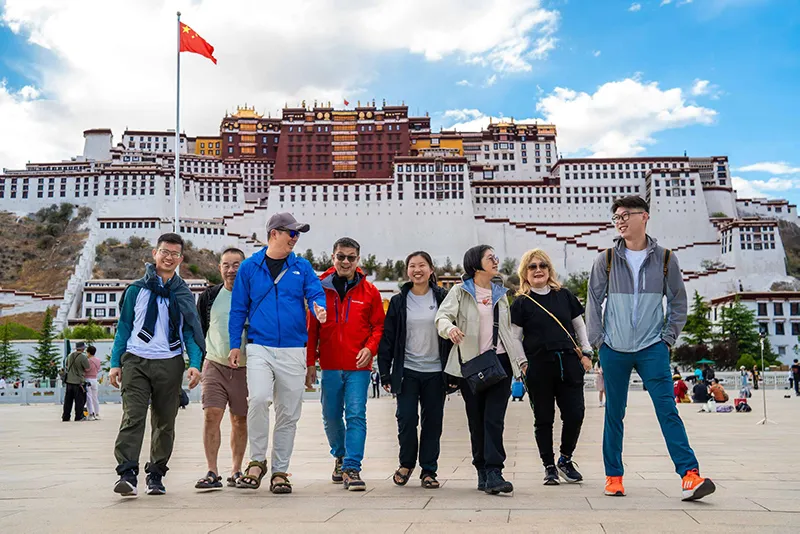
Once in Lhasa, you can visit the Potala Palace and Jokhang Temple, and see pilgrims following the Barkhor circuit around the temple. The Potala's murals, halls and stupas carry rich historical and religious meaning, and a guide's explanations help you understand what you are seeing. The Jokhang and the surrounding Barkhor area bring you into contact with pilgrimage traditions that are still very much alive, as well as everyday local life. When visiting monasteries, follow local etiquette and photography rules, and respect religious activities in progress.
 |
Beyond sightseeing, you can try Tibetan noodles, butter tea and tsampa, a staple made from roasted barley flour. If you are interested, you can also try on traditional Tibetan clothing for photographs. Setting aside time in Lhasa lets you go beyond driving or riding and understand local culture and daily life more deeply.
 |
Continuing from Lhasa: Mount Everest and the Night Sky
Reaching Lhasa does not have to mean the end of the road trip. With enough time, you can continue west via Shigatse towards the Everest region.
For driving and riding enthusiasts, the mountain passes and viewpoints along the way make the approach to Everest an important part of the journey. Different light changes the mountain dramatically, and the colours around sunset are especially worth waiting for. If you hope to see the sunset and the night sky, you can arrange an overnight stay locally when conditions allow, confirming accommodation and vehicle access arrangements in advance. Whether the peak is clearly visible depends on the weather; stargazing also depends on cloud cover and moonlight, and you will need warm clothing at night.
 |
Further West: Ngari and Mount Kailash
If you want to go further, you can extend the journey to Ngari, visiting Lake Manasarovar and the Mount Kailash area. High plateau lakes, vast wilderness and the sacred mountain are the main draws of this western Tibet extension.
Travellers with enough time and the necessary fitness can also arrange a kora — a pilgrimage trek around Mount Kailash. This is a high-altitude trek that requires additional days, physical preparation and altitude acclimatisation. Along the route, photographs left by pilgrims can be seen on some boulders. These traces, connected to personal prayers and remembrance, give visitors a sense of the personal and religious significance of the pilgrimage.
 |
Wildlife Along the Way
Yaks, sheep and grazing pastures are a common sight on many sections of the route. In some high plateau areas there is also a chance to spot wildlife such as kiang (Tibetan wild asses) and Tibetan antelope. Slow down, keep your distance, and do not chase or feed wild animals.
 |
How to Arrange Your Tibet Self-Drive or Motorcycle Tour
To start planning, tell us a few things: when you would like to travel and how many days you have; where you would like to start and the places you most want to see; whether you prefer a car or a motorcycle, and whether you plan to rent a vehicle or bring your own; how many people are travelling and your driving or riding experience.
You will then need to provide your passport, visa or other valid entry and stay documentation, driving licence and other materials in advance. We will confirm the exact list based on your itinerary. For international travellers, a Tibet self-drive or motorcycle tour still needs to be arranged through a travel agency and accompanied by a guide; driving yourself does not mean travelling independently. A foreign driving licence alone does not authorise you to drive in China. We will help you confirm the Chinese driving permit or licence required for your chosen vehicle. Travellers bringing their own vehicles from abroad will also need to arrange temporary vehicle entry procedures.
We can help plan your route, check your documents, coordinate the required permits, and arrange vehicles, guides and accommodation. Our motorcycle tours also include a support vehicle and a pre-departure briefing. We will explain what to prepare and which steps require your participation, helping you organise the trip step by step.
Ask a Quick Question & Free Enquiry

If you have a WhatsApp, please feel free to scan our WhatsApp code.