 +86-13981905144
 inquiry@chinaroadtrip.org
Routes, Permits, and Driving Advice for Malaysian Drivers
Written by China Road Trip | Updated 2026-9-4

Roughly 3,000 kilometres as the crow flies separate Malaysia from the Tibetan Plateau—but the two regions represent completely different driving worlds. Malaysian drivers must transition from tropical lowlands to some of the world’s highest roads, from left-side to right-side traffic, and from familiar Malay and English road signs to a predominantly Chinese driving environment. For Malaysian travellers hoping to explore Tibet by car, the journey is both appealing and demanding.
There are four practical ways to begin: fly to a major Chinese city and connect to Lhasa; fly directly to Kunming and approach Tibet via G214; fly directly to Chengdu and take the classic G318 route; or bring a Malaysian-registered vehicle through Thailand and Laos. Whichever option you choose, you will need the correct Tibet travel documents and a Chinese Temporary Driving Permit. A Malaysian licence or International Driving Permit alone is not sufficient.
This guide explains the available routes, Tibet entry rules, driving-permit process, major road differences, altitude considerations and preparation timeline for a safe and well-organized journey.
How to Start a Tibet Self-Drive Journey from Malaysia
Malaysian travellers can begin a Tibet self-drive journey in several ways, depending on their available time, driving experience and whether they plan to rent a vehicle in China or bring their own. Flying to Lhasa offers the shortest option, while starting in Kunming or Chengdu provides a longer drive across some of China’s most celebrated mountain highways.
Fly via a Major Chinese City and Begin Driving in Lhasa
Route: Kuala Lumpur → a major Chinese gateway → Lhasa
 |
There are currently no regular direct flights from Malaysia to Lhasa. Most travellers connect through cities such as Chengdu, Chongqing, Beijing, Shanghai, Guangzhou, Shenzhen or Kunming, depending on the date and airline schedule. After arriving in Lhasa, allow two or three days for basic acclimatization before starting a demanding drive. The temporary driving permit, vehicle and Tibet arrangements should be coordinated before departure.
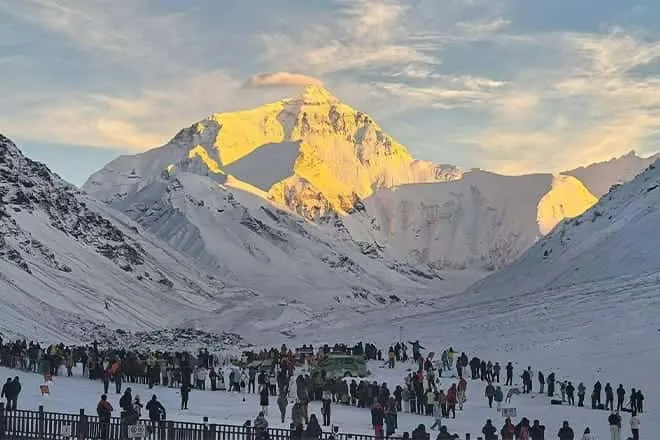
A popular route runs from Lhasa through Yamdrok Lake, Gyantse and Shigatse to Everest Base Camp, then returns to Lhasa. It avoids the long approach along G214 or G318 while still providing a substantial high-altitude driving experience.
Fly Directly to Chengdu and Drive the G318 to Lhasa
Route: Kuala Lumpur → Chengdu → Kangding → Yajiang → Litang → Markam → Ranwu → Bomi → Nyingchi → Lhasa
 |
Malaysia Airlines resumed direct Kuala Lumpur-Chengdu services in January 2026, although schedules should be checked for the intended dates. From Chengdu, the route follows G318 for roughly 2,100-2,200 kilometres through western Sichuan and eastern Tibet. It includes long climbs and descents, high mountain passes such as Dongda La and the hairpin bends of the Nujiang 72 Turns.
The main highway is paved, but its length, altitude and changing weather make it more demanding than a shorter Lhasa-based trip. Drivers should not compress the journey into consecutive long days.
Fly Directly to Kunming and Drive to Lhasa via G214
Route: Kuala Lumpur → Kunming → Dali → Lijiang → Shangri-La → Deqin → Markam → Nyingchi → Lhasa
 |
Direct flights link Kuala Lumpur and Kunming in around four hours, making Kunming a convenient gateway for travellers combining Yunnan and Tibet. The journey initially follows G214 through Dali, Lijiang, Shangri-La and Deqin, then joins G318 at Markam for the final section to Lhasa. The complete route is approximately 2,300 kilometres, depending on the itinerary.
Starting at Kunming's lower elevation offers a more gradual introduction to altitude than flying directly to Lhasa, but the road still includes repeated climbs, descents and high passes. Most of the main route is paved, although construction, rain, landslides and snow can affect individual sections.
Drive Overland from Malaysia with Your Own Vehicle
Direction: Malaysia → Thailand → Laos → Boten-Mohan Border →Yunnan → Tibet
 |
Malaysia has no direct land border with China, so drivers must cross Thailand and Laos before entering Yunnan at Mohan. Depending on the starting point and final itinerary, the drive to Lhasa may exceed 5,000 kilometres and should be planned over several weeks, not as a seven-to-nine-day dash.
Foreign vehicles require advance approval. The arrangements normally include an agreed route and ports, customs clearance or guarantee, Chinese insurance, vehicle inspection, temporary registration and number plates, plus a temporary driving permit for each driver. An ATA Carnet should not be presented as universally required; the customs method must be confirmed for the specific vehicle and port.
Most Malaysian vehicles are right-hand drive. Steering position may affect approval for temporary entry and road use, so vehicle specifications must be assessed before departure. Approval cannot be assumed or arranged simply by arriving at the border.
Need help choosing a starting point? Share your available days, preferred driving distance and whether you plan to rent or bring a vehicle. We can compare the Lhasa, Kunming, Chengdu and overland options and recommend a realistic route before the permit and vehicle arrangements begin.
Tibet Entry Rules for Malaysian Travellers
A Tibet Travel Permit Is Mandatory
The Tibet Travel Permit (TTP) is required for Malaysian and other foreign passport holders entering the Tibet Autonomous Region. It is not a Chinese visa: a visa or visa-free status permits entry to mainland China, while the TTP permits entry to Tibet. Travellers need it for flights, trains and road checkpoints.
 |
Individuals cannot apply directly. A licensed Tibet travel agency submits the application after a private or group tour and itinerary have been confirmed. Visa-free Malaysian tourists generally provide a clear passport copy; travellers holding a visa, residence permit, work permit or student status may need additional documents. Current boarding rules should be reconfirmed, including where the original permit will be delivered before travel.
The permit must also be available at road checkpoints when entering Tibet from Sichuan or Yunnan. For travellers flying or taking a train, the agency normally sends the required document to a hotel or agreed address in mainland China before departure; do not assume a phone image will be sufficient.
Visa-Free Entry Does Not Replace the TTP
Malaysian ordinary passport holders can currently enter China visa-free for eligible short visits of up to 30 days per entry, with cumulative stays limited to 90 days in any 180-day period. This does not remove the Tibet permit or driving-permit requirements, and long itineraries must fit within the allowed stay.
| Requirement | Purpose |
| Passport and valid entry status | Enter mainland China |
| Tibet Travel Permit | Enter and travel in Tibet |
| Chinese Temporary Driving Permit | Drive legally in mainland China |
| Route-specific permits | Visit certain border or controlled areas |
Self-Drive Does Not Mean Independent Travel
Malaysian travellers may drive an approved vehicle themselves, but foreign tourists cannot travel independently in Tibet. The Tibet section must be arranged through a licensed agency with a confirmed itinerary and local guide. This rule also applies to travellers bringing their own foreign-registered vehicle.
Additional Permits
Everest Base Camp, Mount Kailash, Ngari and some border or controlled areas may require a border pass, Foreign Affairs Permit, Military Permit or other authorization. The exact combination depends on the route and current policy. Once the itinerary is final, the agency determines and arranges the necessary documents.
Permit planning: Once your dates and destinations are confirmed, our team can prepare the approved itinerary, apply for the Tibet Travel Permit and route-specific permits, and coordinate delivery of the required document before you travel to Tibet.
Can Malaysian Tourists Legally Drive in China?
Receiving permission to enter Tibet does not automatically give a Malaysian traveller the right to drive there. Driving permission is handled separately under China’s national traffic regulations and is required whether the journey begins in Lhasa, Kunming or Chengdu.
Malaysian Licence and IDP
A Malaysian driving licence alone is not valid in mainland China, but a valid full licence can support an application for a Chinese Temporary Driving Permit. A Malaysian International Driving Permit issued by JPJ is also not independent driving authorization in China and cannot replace the Chinese permit.
 |
The permitted category must remain within the scope of the Malaysian licence. For rented vehicles, the temporary permit is normally limited to Chinese C1 small vehicles or C2 small automatic vehicles. For an imported vehicle, the permit category must match both the foreign licence and the vehicle brought into China.
Documents Commonly Required
The application documents commonly include:
- √ A valid Malaysian passport or other accepted entry-exit identity document;
- √ The original, valid Malaysian driving licence;
- √ An accepted Chinese translation of the driving licence;
- √ Two recent one-inch, bareheaded colour photographs with a white background, unless photographs are taken at the service counter;
- √ A completed application form;
- √ Documents relating to the temporary-entry vehicle, if bringing a Malaysian-registered vehicle;
- √ Any additional documents requested by the local Vehicle Management Office.
Translations may be provided by an accepted translation agency, a foreign embassy or consulate in China, or a local notarial organization, depending on the city. Some Vehicle Management Offices can also help applicants arrange a translation. Self-prepared translations should not be assumed to be acceptable.
Medical or physical-condition documentation may depend on the applicant, vehicle category and local implementation. For example, Beijing exempts temporary inbound applicants seeking permission for light vehicles and motorcycles from submitting a physical-condition certificate. Applicants aged 70 or above may be required to complete an additional capacity test.
Requirements should therefore be confirmed in the city where the permit will be issued rather than assumed to be identical throughout China. Official Shanghai and Chongqing guidance lists the passport, foreign licence, Chinese translation, photo process and traffic-law learning as the main requirements.
How to Get a Chinese Temporary Driving Permit
The general application process is:
- 1. Check the validity of your Malaysian licence.
Learner’s, provisional or probationary licences may not qualify as full foreign driving licences.
- 2. Confirm the permitted vehicle category.
Make sure the Malaysian licence covers the vehicle you intend to drive. Rental vehicles are generally limited to the Chinese C1 or C2 categories.
- 3. Arrange an accepted Chinese translation.
Confirm which translation providers or formats are recognized in the city where you will apply.
- 4. Coordinate the application city with the vehicle pickup.
Travellers renting a vehicle normally apply in the city where the rental company is located. Drivers bringing their own vehicle normally apply at the authorized place connected with the entry or departure port.
- 5. Visit the Vehicle Management Office in person.
Some cities also provide temporary-permit services at selected airport counters. Beijing, for example, lists service stations at Beijing Capital International Airport and Beijing Daxing International Airport, although locations and opening hours should be checked in advance
- 6. Submit the documents and complete the photo procedure.
Complete any additional health or identification formalities required for the application.
- 7. Complete the required traffic-law education.
Applicants generally attend a short session covering Chinese road traffic laws and safety rules. A formal theory examination is not a standard requirement for every temporary applicant, although additional testing may apply in specific circumstances.
- 8. Pay the applicable fee and collect the permit.
Once the application has been approved, the permit is issued by the traffic management authority.
The applicant must normally appear in person; the entire process cannot be completed remotely before arrival in China. A travel agency may help prepare the translation, documents and appointment, but it cannot replace the applicant at the final in-person procedure. For visitors staying in China for no more than three months, a temporary permit with three-month validity may be issued. For longer authorized stays, validity may be extended up to one year. However, the driving permit does not extend the traveller’s visa, visa-free stay or other immigration permission.
What Documents Must You Carry While Driving?
The Chinese Temporary Driving Permit should not be carried alone. While driving, Malaysian travellers should keep the following documents available:
- * Chinese Temporary Driving Permit;
- * Original Malaysian driving licence;
- * Accepted Chinese translation of the licence;
- * Passport or relevant entry-exit document;
- * Rental contract when driving a rented vehicle;
- * Vehicle registration and insurance documents.
The vehicle category, permit validity and immigration stay should all remain valid throughout the journey.
 |
Driving-permit support: Before paying for a translation or confirming a rental vehicle, send us your starting city, licence category and intended vehicle type. We can help check the local application requirements, coordinate the permit appointment and confirm whether the vehicle provider accepts foreign drivers.
Key Driving Differences Between Malaysia and China
Although experienced Malaysian drivers may be comfortable with long-distance travel, driving in mainland China requires several important adjustments. The most immediate difference is the side of the road, but navigation, payment systems, traffic behaviour, altitude and weather can also affect the journey.
Driving Side and Steering Position
Malaysia follows left-hand traffic, and most Malaysian vehicles are right-hand drive. Mainland China follows right-hand traffic, while locally registered rental vehicles are generally left-hand drive.
 |
This changes several familiar driving movements. Malaysian drivers must approach turns, junctions, roundabouts and overtaking from the opposite road position. The direction of traffic flow in roundabouts is also different: vehicles normally circulate clockwise in Malaysia and counterclockwise in mainland China.
The position of the driver within the vehicle also changes. Controls such as the indicator and windscreen-wiper stalks may be arranged differently depending on the vehicle model, which can add to the adjustment during the first stage of the journey.
Parking itself is not necessarily “reversed,” but entering and leaving parking areas can feel unfamiliar because the driver is seated on the opposite side and traffic approaches from a different direction.
Road Signs and Navigation
Road signs in Malaysia commonly use Malay and English, while road signs in mainland China primarily use Chinese. Many expressways and major tourist routes include English transliterations, but English is not consistently available on local and remote roads.
 |
Foreign travellers may also encounter different English spellings for the same destination. For example, a place may appear under its Chinese pinyin name, an older spelling or a locally used Tibetan transliteration. This can make it difficult to match hotel addresses, road signs and online maps.
International navigation services such as Google Maps may have incomplete, outdated or misaligned road information in mainland China. China-based navigation platforms generally provide more current information about local roads, closures and traffic conditions.
Mobile coverage is usually reliable in cities and along major highways, but signals can become weaker in remote valleys, mountain passes and sparsely populated areas of Tibet.
Tolls, Fuel and Payment Systems
Both Malaysia and China have tolled expressways, but the scale, payment process and toll-station layout differ. China has an extensive expressway network with frequent entrances, exits and toll plazas. Drivers using rental vehicles also need to understand whether the vehicle has an ETC electronic toll device or whether payment must be made manually.
Mobile payment through Alipay and WeChat Pay is widely used for tolls, fuel, parking and everyday purchases. International bank cards are accepted at some businesses, but acceptance is less consistent at smaller fuel stations and in remote areas.
Cash remains a valid payment method in China, so the article should not claim that toll booths or petrol stations require mobile payment. However, mobile payment is often the most convenient option. China’s official guidance confirms that overseas visitors can use mobile payment, bank cards and cash, including linking eligible international cards to Alipay or WeChat Pay.
Fuel stations are common on major routes, but the distance between them increases in remote sections of Tibet. Availability may also be affected by road conditions, opening hours and the type of fuel required.
Climate, Altitude and Vehicle Performance
Most driving in Malaysia takes place in a tropical, relatively low-altitude environment. Tibet presents a very different combination of elevation and climate.
 |
Lhasa stands at approximately 3,650 metres, while many sections of the G318, G214 and Everest routes exceed 4,000 metres. Several mountain passes rise above 5,000 metres. At these elevations, drivers may experience headaches, fatigue, dizziness, poor sleep and reduced concentration.
Altitude also affects the vehicle. Engines—particularly naturally aspirated engines—may produce less power in thin air. Long mountain descents can place additional strain on brakes, while cold temperatures can affect tyre pressure, batteries and engine starting.
Vehicle and route planning: If changing to right-side traffic or driving at altitude is a concern, tell us your experience and chosen route. We can help arrange a suitable locally registered vehicle and plan easier opening stages before the more demanding mountain sections.
How Malaysian Drivers Can Adapt Safely
Adapt to the Vehicle and Right-Side Traffic
Begin with a short drive in a quiet area rather than heading directly into city traffic or the mountains. An automatic vehicle reduces workload while the driver becomes familiar with the left-hand-drive position. At every junction, consciously confirm the correct right-hand lane, especially after parking, refuelling or stopping at a viewpoint.
Slow down when a traffic pattern is unclear. A passenger can help watch for signs and blind spots, but the driver remains responsible for every manoeuvre. Avoid unnecessary night driving until fully comfortable with the vehicle and route.
Prepare Navigation, Payment and Communication
Use a navigation platform with reliable mainland China data, such as Amap or Baidu Maps. Save the Chinese names of hotels, destinations, fuel stations and hospitals, and download offline information where available. Keep each day's route and emergency contacts accessible without mobile data.
Set up Alipay or WeChat Pay with an eligible international card and arrange a local SIM, eSIM or reliable roaming. Carry some RMB cash as backup. Your guide can help confirm road changes, Chinese addresses, checkpoints and local communication.
Manage Altitude
Travellers flying to Lhasa should normally allow two or three days for basic acclimatization before a demanding drive. Starting in Kunming or Chengdu provides a more gradual approach but does not eliminate risk. Keep early stages manageable, rest regularly, stay hydrated, eat normally and avoid alcohol during the first 48 hours at altitude.
Supplemental oxygen can be useful but does not replace medical assessment or descent. A driver with headache, dizziness, nausea, unusual fatigue or poor coordination should stop driving and avoid further ascent while symptoms are assessed. Worsening symptoms, confusion, difficulty walking or breathlessness at rest require urgent assistance.
Allow for Weather and Road Changes
Check weather and road status each morning. Summer rain can cause rockfall, landslides and delays, while winter brings snow and black ice. Navigation estimates may not include checkpoints, animals, construction, acclimatization breaks or changing mountain weather, so every day needs a reasonable time buffer.
A local guide and agency can keep the journey aligned with the permits, provide road updates, assist at checkpoints, locate fuel and repairs, and coordinate help during a breakdown, health problem or weather disruption.
Support on the road: We can build shorter first-day stages, allow time for acclimatization and provide local assistance with route updates, checkpoints, fuel, accommodation and unexpected delays. This is especially useful for drivers new to right-side traffic or high-altitude roads.
When to Go and How Long to Spend on the Road
Choosing the right time is particularly important for a Tibet self-drive journey. The best season depends on whether the traveller begins in Lhasa, follows G214 or G318, or drives all the way from Malaysia through Thailand and Laos.
Best Time for a Tibet Self-Drive Journey
- May to June
May and June are among the most suitable months for a road trip across Tibet. Temperatures are generally milder than in early spring, rainfall is usually lower than during the main summer monsoon, and the landscape becomes progressively greener.
May can still be cool or relatively dry and brown in some high-altitude areas, so the entire plateau should not be described as consistently green.
 |
- July to August
July and August are warmer and bring greener landscapes, but they also coincide with the rainy season. Rainfall may cause rockfall, landslides, road repairs and temporary traffic restrictions, particularly along mountain sections in Yunnan, western Sichuan and eastern Tibet.
Self-drive travel remains possible, but the itinerary should include buffer days. Clear views of Everest are also less predictable because of cloud and changing weather.
- September to October
September and October are among the best months for a Tibet road trip. Rainfall generally decreases, visibility improves and the chances of seeing Everest and other Himalayan peaks are often better.
Temperatures begin to fall, particularly at night and at high mountain passes. Snow or ice can occur later in October, so weather and road conditions should still be checked daily.
 |
- November to February
Winter self-drive journeys can be arranged with experienced local support, but conditions are more demanding. Travellers may encounter: Freezing temperatures; Snow and black ice; Shorter daylight hours; Strong winds at mountain passes; Temporary route changes or closures.
Winter should not be described as impossible, but it is better suited to experienced drivers using appropriate vehicles and a flexible itinerary.
- What About Driving Overland Through Thailand and Laos?
Thailand and Laos generally experience drier road conditions from approximately November to April. However, this does not make the same period ideal for the Tibetan section, where winter brings low temperatures, snow and ice.
There is no single perfect season for the complete Malaysia–Thailand–Laos–China–Tibet route. Two possible compromise periods are:
- Late April to May: generally suitable for entering Yunnan and continuing toward Tibet, although heat or early rain may affect parts of Southeast Asia;
- Late September to early November: often good for Tibet, but residual monsoon rain may still affect Thailand and Laos early in the period.
The timing should therefore be planned across the entire international route rather than based only on the dry season in Thailand and Laos.
Recommended Duration
| Journey | Suggested duration |
| Fly to Lhasa and drive to Everest Base Camp | 8-19 days |
| Chengdu to Lhasa via G318 | 12-15 days |
| Kunming to Lhasa via G214 and G318 | 14-18 days |
| Malaysia to Lhasa with your own vehicle | 3-5 weeks or longer |
These estimates include basic acclimatization and sightseeing, not only driving time. Add days if continuing from Lhasa to Everest, travelling in the rainy or winter season, or completing multiple international borders. Mountain driving should be planned around elevation, daylight and road conditions rather than distance alone.
The Lhasa-Everest estimate includes two or three days for initial acclimatization. Travellers extending a Kunming or Chengdu journey from Lhasa to Everest should normally add another four to six days rather than treating Everest as a short detour.
Choosing your travel window: Share your preferred month, available days and whether Everest is a priority. We can compare the route and season, suggest a realistic duration and include the necessary weather and acclimatization buffer instead of forcing the journey into an overly tight schedule.
How Far in Advance Should You Prepare?
Two to Three Months Before
- • Choose the starting point and decide whether to rent or bring a vehicle.
- • Set tentative dates and contact a licensed Tibet travel agency.
- • Check passport and licence validity and the available visa-free stay.
- • Use flexible bookings until the route and permit plan are confirmed.
Renew a passport before any permit application if necessary, because the Tibet documents are linked to its number. Travellers bringing their own vehicle should now submit registration, ownership, photographs, VIN and engine number, dimensions, driver details, proposed route and entry and exit ports for initial assessment.
One to Two Months Before
- • Confirm the vehicle, rental provider, guide and accommodation.
- • Confirm where the temporary driving permit will be issued.
- • Arrange the accepted Chinese translation after checking local requirements.
- • Review insurance, mileage, recovery support and vehicle-return conditions.
- • Prepare season-appropriate clothing, communications and payment tools.
At Least 20-30 Days Before Tibet
Submit clear passport copies and finalize the itinerary. A standard Tibet Travel Permit commonly takes about 8-10 working days to process, with extra time needed for review and delivery of the original document. Submit at least 20 days ahead; 30 days or more is safer in peak season or for Everest, border regions, Kailash or Ngari.
Avoid changing passports, travellers, dates, entry method or restricted-area routes after submission, since the agency may need to amend or resubmit the application. Confirm where the original permit will be collected.
Final Week and Arrival
- • Reconfirm flights, permit delivery, driving-permit appointment and vehicle pickup.
- • Download route information and save important documents and contacts offline.
- • Bring the original Malaysian licence; do not rely only on a digital record or copy.
- • Complete the driving-permit procedure in person after arrival.
- • Check the permit details, rental contract, registration and insurance.
- • Inspect tyres, brakes, lights, fluids, spare tyre and emergency equipment, then take a short test drive.
Photograph existing vehicle damage and make sure it appears in the handover record. Before the first long stage, verify that the guide has the approved itinerary and route-specific permits, and save support contacts offline.
Ready to start planning? Send us your tentative dates, starting city, number of travellers and vehicle plan. We can work backwards from your departure date and coordinate the permit, driving-licence translation, vehicle, guide and document-delivery timeline as one process.
FAQs for Malaysian Drivers
- Can I drive in China with a Malaysian licence?
No. A Malaysian licence alone is not valid in mainland China. You need a Chinese Temporary Driving Permit and must carry the original licence and accepted Chinese translation while driving.
- Is a Malaysian International Driving Permit valid in China?
No. A Malaysian IDP does not independently authorize driving in mainland China and cannot replace the Chinese Temporary Driving Permit.
- Are there direct flights from Malaysia to Lhasa?
There are currently no regular direct flights. Travellers normally connect through another Chinese city, with the best gateway depending on the date and airline schedule.
- Can Malaysian tourists rent a car in China?
Generally yes, after obtaining the required permit and finding a rental company that accepts foreign drivers. A Tibet journey must still be arranged with the required permits, guide and itinerary.
- Do visa-free Malaysian travellers still need a Tibet Travel Permit?
Yes. Visa-free entry covers mainland China immigration; it does not remove the separate permit required to enter and travel in Tibet.
- Can Malaysian tourists drive independently in Tibet?
They may drive an approved vehicle themselves, but cannot travel independently. The Tibet portion must be an organized private or group journey with a licensed guide and approved itinerary.
- Can I bring a Malaysian-registered vehicle into China?
It may be possible with advance approval, customs arrangements, Chinese insurance, inspection, temporary registration and number plates. Approval is not guaranteed and cannot simply be arranged at the border.
- Can a right-hand-drive Malaysian vehicle enter China?
Not automatically. Steering position may affect temporary-entry approval. Submit the vehicle specifications to the agency and intended port for assessment before beginning the journey.
Choose the Right Journey
First-time visitors with limited time can fly via a Chinese gateway to Lhasa and take an 8-10-day Everest route. Travellers combining Yunnan and Tibet can begin in Kunming, while experienced mountain drivers may prefer the Chengdu-Lhasa section of G318. Bringing a Malaysian vehicle through Thailand and Laos is the most complex option and requires several months of preparation.
For most Malaysian travellers, renting a locally registered vehicle is simpler than importing their own. Share your travel dates, preferred starting city and vehicle plan with us, and we can help coordinate the Tibet permits, driving documents, vehicle and local support required for the journey.
Ask a Quick Question & Free Enquiry

If you have a WhatsApp, please feel free to scan our WhatsApp code.