 +86-13981905144
 inquiry@chinaroadtrip.org
Driving Permits, Tibet Travel Documents, Vehicle Options and Self-Drive Routes for Canadians
Written by China Road Trip | Updated 2026-9-3

Canadians know long roads. The Trans-Canada Highway crosses the country, the Icefields Parkway winds through the Rockies, and the Dempster Highway reaches beyond the Arctic Circle. Drivers familiar with these routes already understand long distances, mountain weather and the need for careful preparation.
A Tibet road trip adds challenges that Canadian driving experience cannot solve by itself: Chinese driving authorization, language and navigation differences, sustained high altitude and special travel rules for foreign visitors.
The short answer is yes: Canadian tourists can drive in mainland China and can personally drive on an arranged Tibet journey. However, a Canadian provincial or territorial licence and a CAA-issued International Driving Permit are not sufficient on their own. You need the appropriate Chinese driving permit, and travel in the Tibet Autonomous Region must be arranged through a licensed travel agency.
This guide explains the documents, vehicles, routes, seasons and practical preparation Canadian drivers need for a legal and realistic Tibet self-drive tour.
Can Canadian Tourists Legally Drive in China?
Yes, but only after obtaining the appropriate Chinese driving authorization. A Canadian provincial or territorial driving licence is not independently valid in mainland China, and a CAA-issued International Driving Permit does not replace a Chinese permit.
Short-term visitors normally apply for a Temporary Motor Vehicle Driving Permit after arriving in China. The permit authorizes only the vehicle categories stated on it and should be carried together with the original Canadian licence and its accepted Chinese translation. Section 3 explains the application process.
 |
How Is Driving in China Different from Driving in Canada?
China and Canada share the same basic road orientation, so Canadian drivers do not need to adapt to left-side traffic or a right-hand-drive vehicle.
| Aspect | Canada | Mainland China |
| Driving side | Right | Right |
| Common vehicle layout | Left-hand drive | Left-hand drive |
| Distance and speed | Kilometres and km/h | Kilometres and km/h |
| Canadian licence | Valid | Not valid on its own |
| CAA-issued IDP | Used for some overseas travel | Does not authorize driving |
The larger differences involve daily driving procedures:
 |
- Road signs and language: Major highways use standardized symbols and may show pinyin or English transliterations, but local signs, parking instructions and service information are often mainly in Chinese.
- Navigation: Google Maps is not a dependable option in mainland China. Amap and Baidu Maps generally provide better local road and traffic information, although English support varies.
- Tolls and payments: Toll expressways are common, while WeChat Pay and Alipay are widely used for fuel, parking and other expenses. Confirm payment arrangements with the vehicle provider.
- Enforcement: Speed cameras and lane monitoring are widespread. China treats a blood alcohol concentration of 20 mg per 100 ml or above as driving after drinking, so visiting drivers should not drink before driving.
How Can Canadians Get a Chinese Temporary Driving Permit?
For most Canadian tourists, the relevant document is a Temporary Motor Vehicle Driving Permit issued on the basis of a valid foreign driving licence. Application details vary by city, so confirm the intended office before travel.
 |
Documents Usually Required
- √ A valid Canadian provincial or territorial driving licence
- √ A valid passport and accepted entry documentation
- √ A Chinese translation of the Canadian licence from an accepted translation or notarial service
- √ Recent identification photographs that meet local specifications
- √ The application form and any additional documents requested by the issuing office
Applicants must hold a valid foreign driving licence. Temporary, learner’s and provisional licences are not accepted under published application rules. Canadians holding a graduated or otherwise restricted licence should confirm eligibility with the intended Vehicle Management Office before departure.
Application Process
- 1. Prepare the original passport, Canadian driving licence and required entry documents.
- 2. Obtain an accepted Chinese translation of the licence.
- 3. Visit the designated Vehicle Management Office or authorized service point in person.
- 4. Submit the documents and complete identity, photograph and any applicable age-related checks.
- 5. Complete any required traffic-safety instruction and collect the permit after approval.
An ordinary written theory test and practical road test are generally not required for a short-term permit. Applicants aged 70 or above may need to complete tests of memory, judgment and reaction ability.
Processing Time and Validity
Some offices issue the permit on the same day when every document is accepted; others may take several working days. Do not schedule the first driving stage immediately after arrival.
For a stay of no more than three months, the permit is generally valid for three months. For a longer approved stay, validity may correspond to that period but normally cannot exceed one year. The issuing authority determines the final validity and permitted vehicle categories.
For a Tibet trip, confirm the application city with the operator before booking. Depending on the route and current local arrangements, processing may be coordinated in a gateway city such as Kunming, Chongqing, Lhasa or Urumqi.
Can Canadian Tourists Drive Independently in Tibet?
No. Holding a Chinese driving permit and having permission to travel in Tibet are separate matters. Outside restricted regions, visitors with the appropriate Chinese permit may generally drive an eligible rental vehicle or their own temporarily admitted vehicle, subject to local rules. The Tibet Autonomous Region has additional requirements.
 |
Foreign tourists must arrange their Tibet journey through a licensed travel agency, follow a confirmed itinerary and travel with the required authorized guide. A Tibet ‘self-drive tour’ means that you personally operate the vehicle; it does not mean unrestricted independent travel.
- You cannot rent a vehicle elsewhere in China and enter Tibet alone.
- The route must be confirmed before the travel-permit applications are submitted.
- The required guide accompanies the trip, and permits may be checked along the route.
- Everest Base Camp, border regions and western Tibet may require additional documents.
What Permits Are Required for a Canadian Tibet Self-Drive Tour?
The required documents fall into three layers.
- China Entry Documents
Canadian travelers need a valid passport and either an appropriate Chinese visa or eligibility under a current visa-free policy. From February 17 to December 31, 2026, eligible Canadian citizens holding ordinary passports may enter China without a visa for up to 30 days for tourism and certain other purposes. This policy does not remove Tibet permit requirements and should be rechecked before travel.
- Driving Documents
The driver normally needs a valid Canadian licence, an accepted Chinese translation and a Chinese Temporary Motor Vehicle Driving Permit. The permit authorizes driving; it does not authorize entry into Tibet. See Section 3 for the application details.
- Tibet Travel Documents
 |
- Tibet Travel Permit: The basic document required for foreign tourists entering the Tibet Autonomous Region. It is arranged through a licensed travel agency as part of a confirmed journey.
- Aliens’ Travel Permit: May be required for specified destinations outside Lhasa, including areas covered by many Everest itineraries
- Border Pass: Required for certain locations near international borders, including Everest Base Camp and parts of western Tibet.
- Military or Foreign Affairs permits: Required only for particular sensitive or remote routes, especially some itineraries in Ngari.
The exact combination depends on the approved itinerary. Your agency collects the required passport details and coordinates the applications; foreign tourists cannot apply independently for the Tibet Travel Permit.
How Is Driving in Tibet Different from Driving in Canada?
Canadian mountain-road experience is valuable, but Tibet combines altitude, long distances, checkpoints and limited services in a way that most Canadian roads do not.
| Factor | Canadian Rockies | Tibetan Plateau |
| Typical touring elevation | Often about 1,000-2,200 m | Frequently 3,000-5,000 m |
| Time at high altitude | Usually limited | Several days or longer |
| Mountain passes | Highwood Pass about 2,206 m | Several popular passes exceed 5,000 m |
| Roadside services | Generally predictable on main routes | Uneven in remote areas |
| Additional procedures | Normal road rules | Travel permits and checkpoints |
- Altitude
In Tibet, travelers may remain above 3,500 metres for days. Experience with cold weather or mountain driving does not provide physiological acclimatization. Headache, dizziness, nausea and fatigue may make driving unsafe, while naturally aspirated vehicles may feel less responsive at very high elevations.
- Road Conditions and Driving Time
Major touring roads are largely paved, including much of the G318, G214 and the route from Lhasa toward Everest Base Camp. Nevertheless, individual sections may be affected by construction, gravel, snow, ice, rain-season rockfalls or sudden visibility changes.
Map distance is not a reliable measure of the driving day. Speed controls, permit checks, weather, photography stops and altitude-related fatigue all add time. Fuel, repairs and medical assistance are available around major towns but may be limited on remote sections.
 |
Should You Use a Vehicle in China or Bring Your Own Canadian Vehicle?
- Use a Vehicle Arranged in China
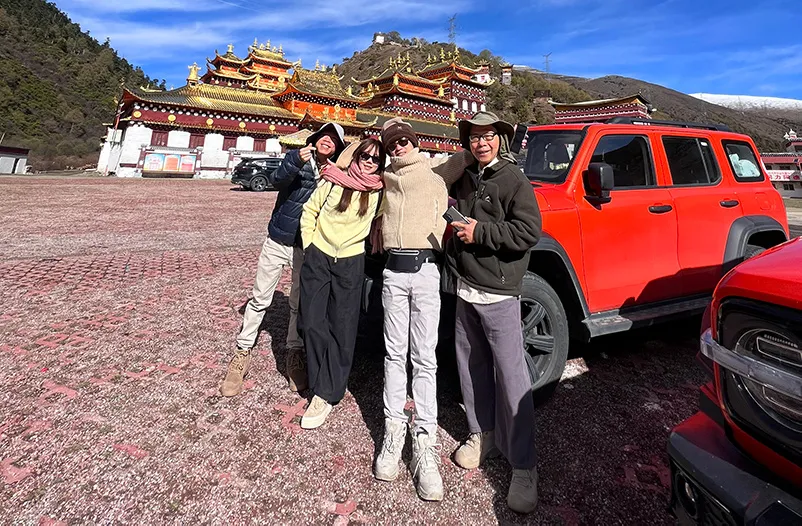
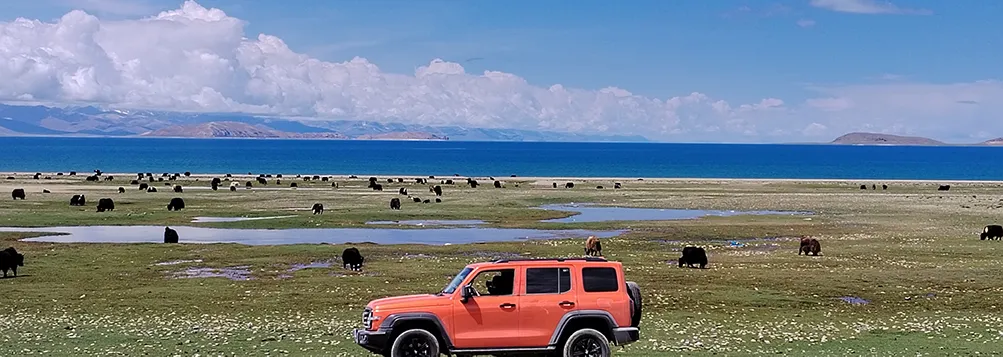
This is the practical option for most Canadian travelers. A locally registered SUV or four-wheel-drive vehicle avoids international shipping and simplifies insurance, registration, maintenance and coordination with the approved Tibet itinerary. After obtaining the correct Chinese driving permit, the traveler can personally drive while the guide and local team provide the required support.
 |
Best for: First-time visitors, travelers with limited time and most Canadians planning a dedicated Tibet journey.
- Bring a Canadian-Registered Vehicle
This option is mainly for experienced overlanders. Because Canada and China have no direct land connection, the vehicle must first be transported overseas and then shipped to a Chinese port or driven through third countries to an approved land border.
Advance arrangements normally include temporary import approval, customs inspection, Chinese compulsory insurance, vehicle inspection, temporary registration and licence plates, translated registration documents and a Chinese driving permit for each driver. The entry point, exit point, route and travel period must also be coordinated in advance.
For most travelers, flying to China and using an arranged vehicle is simpler and more economical. Bringing your own vehicle makes sense primarily when it is an essential part of a longer multi-country expedition.
What Are the Best Tibet Self-Drive Routes for Canadian Travelers?
The best route depends on available time, driving experience and how gradually you want to approach the plateau.
Route 1: Chengdu to Lhasa via G318
- Approximate distance: 2,140–2,160 km
- Recommended duration: 12–16 days
- Typical daily distance: 150–250 km
- Difficulty: Moderate to challenging
- Best for: Drivers seeking the classic overland experience and progressive exposure to altitude
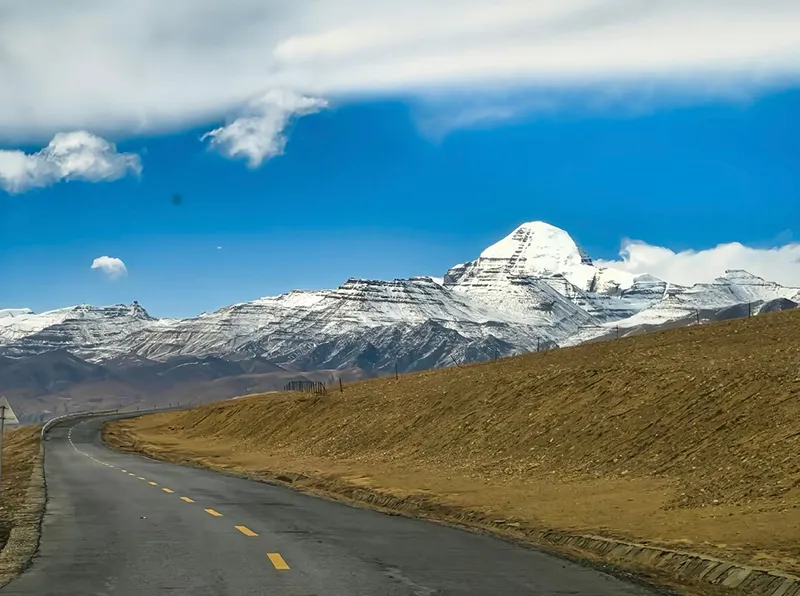
The G318 begins at about 500 metres in Chengdu and repeatedly climbs over high passes before descending into river valleys. Highlights include alpine grasslands, glaciers, forests, Tibetan settlements and dramatic mountain scenery. The route gains altitude more gradually than flying directly to Lhasa, but its repeated climbs and long mountain stages still require careful pacing.
Route 2: Kunming to Lhasa via G214 and G318
- Approximate distance: 2,200–2,300 km
- Recommended duration: 12–16 days
- Typical daily distance: 150–250 km
- Difficulty: Moderate, with challenging high-altitude sections
- Best for: Travelers seeking Yunnan culture, varied scenery and a progressive approach to the plateau
The route begins near 1,900 metres in Kunming, passes Dali, Lijiang, Tiger Leaping Gorge, Shangri-La and Meili Snow Mountain, then joins the G318 at Markam. Its cultural variety is a major attraction, but passes above 4,000 metres mean it should not be treated as an easy low-altitude drive.
Route 3: Lhasa to Everest Base Camp
Route: Lhasa → Yamdrok Lake → Gyantse → Shigatse → Tingri → Everest Base Camp
- Approximate distance: About 680 km one way or 1,350 km round trip
- Recommended duration: 6–10 days, including two or three acclimatization days in Lhasa
- Typical daily distance: 100–200 km on the main touring days
- Difficulty: Moderate, with altitude as the principal challenge
- Best for: Travelers with limited time whose priority is Mount Everest
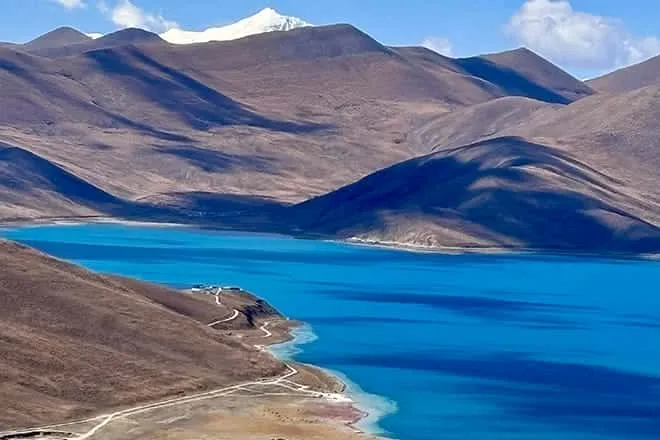
Highlights include Yamdrok Lake, Karola Glacier, Gyantse, Tashilhunpo Monastery and the north face of Everest. Although it is the shortest option, travelers flying directly to Lhasa should not rush toward Everest Base Camp at approximately 5,200 metres.
- Which Route Should You Choose?
Choose the G318 for the classic long-distance road journey, the G214 for Yunnan culture and landscape variety, or the Lhasa–Everest route for a shorter, focused experience. The final itinerary should reflect current road access, permit requirements, altitude response and preferred daily distance.
When Is the Best Time for a Tibet Self-Drive Tour?
For most Canadian drivers, May–June and September–early October provide the strongest combination of visibility, temperature and manageable road conditions. Conditions vary by route and year.
| Period | Typical Conditions | Suitability |
| May-June | Milder weather, greening landscapes and generally stable roads | Best overall window |
| July-August | Warm,green and busy, but wetter with possible road disruption | Good with schedule flexibility |
| September-early October | Clearer skies,Himalayan views and autumn colour | Excellent for scenery |
| Late Autumn-Winter | Cold,shorter daylight,snow and ice risk | Specialist planning and support |
July and August remain possible, but rain can cause rockfalls, landslides, temporary closures and construction delays on the G318 and G214. Around China’s National Day holiday in early October, hotels, vehicles and attractions may be busier.
 |
Winter journeys can offer clear skies and fewer visitors, but road access, temperature and arrangements for foreign travelers may change. Before booking, confirm current weather, road conditions, permit availability and vehicle support with the agency.
How Should Canadian Drivers Prepare for Tibet?
- Acclimatize Before Driving Higher
Travelers flying directly to Lhasa arrive at approximately 3,650 metres. Allow at least two or three days there before beginning a demanding route, avoid strenuous exercise and alcohol during the first 48 hours, rest and stay hydrated. Travelers with heart or lung conditions, a history of altitude illness or a rapid-ascent itinerary should speak to a medical professional before departure.
Do not continue ascending when symptoms such as headache, nausea, dizziness or unusual fatigue develop. Stop driving, rest at the same elevation and inform the guide. Worsening symptoms, confusion, loss of coordination or shortness of breath at rest require urgent medical assistance and a safe descent.
Shorten the Driving Day
- Plan shorter stages than you would in Canada and include regular breaks.
- Consider altitude gain as well as distance when scheduling each day.
- Allow time for checkpoints, roadworks, weather and photography stops.
- Do not drive when illness or fatigue affects concentration or coordination.
Pack and Plan for Remote Sections
- Bring warm layers, waterproof outerwear, sunglasses, sunscreen and a sun hat.
- Carry drinking water, snacks, personal medication, a basic first-aid kit and a power bank.
- Download essential information for offline use and keep copies of documents and emergency contacts.
- Plan fuel stops with the local team and refuel before long remote sections; do not rely on continuous mobile coverage.
- Confirm Insurance
Travel medical insurance and vehicle insurance serve different purposes. Ask the insurer to confirm in writing whether the policy covers the itinerary’s maximum altitude, emergency treatment, medical evacuation, pre-existing conditions and driving in mainland China. Credit-card insurance should not be assumed to cover a Tibet self-drive journey. The vehicle must also carry the locally required registration and insurance.
Remain flexible and follow local advice. Weather, road access, altitude symptoms and checkpoint procedures can require changes even when the original itinerary was carefully planned.
How Should Canadians Plan a Tibet Self-Drive Tour?
For a locally arranged vehicle, begin planning at least two to three months before departure. Travelers bringing a Canadian-registered vehicle should start several months earlier because temporary import, customs, insurance and registration require additional coordination. Avoid major non-refundable commitments until the agency confirms that the route is currently feasible.
Step-by-Step Planning
1. Contact a licensed Tibet travel agency with your proposed dates, route and group size.
2. Choose between the G318, G214, a Lhasa-based route or a longer itinerary including Everest.
3. Confirm whether you will use a vehicle in China or bring your own vehicle.
4. Submit the passport and entry documents required for the Tibet permit applications.
5. Prepare the Canadian licence, Chinese translation and other documents for the Temporary Driving Permit.
6. Confirm the vehicle, guide, accommodation, insurance, daily stages and emergency support.
7. Apply for the driving permit in person after arrival and complete a final document and vehicle check.
A licensed agency can coordinate the Tibet Travel Permit, route-specific permits, compliant itinerary, suitable vehicle, guide, accommodation and logistical support. It can prepare and coordinate the driving-permit process, but the relevant Chinese authority—not the agency—issues the Temporary Driving Permit.
Start Planning
Send us your preferred dates, route, group size, driving experience and vehicle requirements. If you plan to bring a Canadian vehicle, also provide its model, registration, dimensions and proposed Chinese entry and exit points. We can then assess feasibility and design the journey around your available time, altitude needs and preferred daily distance.
FAQs About Driving in China and Tibet for Canadians
- Can I drive in China with a Canadian licence?
No. A Canadian licence is not valid in mainland China on its own. Short-term visitors normally need a Chinese Temporary Motor Vehicle Driving Permit.
- Is a Canadian International Driving Permit valid in mainland China?
No. A CAA-issued IDP does not authorize driving in mainland China or replace a Chinese permit. Hong Kong and Macao have different rules.
- Can Canadians rent a car in China?
Yes, after obtaining the appropriate Chinese driving permit and meeting the provider’s requirements. Confirm that the company accepts foreign passports and temporary permits, because age, deposit, payment and vehicle policies vary.
- Can Canadian tourists drive independently in Tibet?
No. Foreign tourists must use a licensed travel agency, follow an approved itinerary and travel with the required guide, even when they personally drive the vehicle.
- Do Canadians need a Tibet Travel Permit?
Yes. Visa-free entry, when applicable, does not remove the Tibet Travel Permit requirement. Additional documents may be needed for Everest Base Camp, border regions or Ngari.
- Can I bring my Canadian vehicle into China?
Yes, but it requires advance transport, temporary import approval, customs inspection, Chinese insurance, temporary registration and route coordination. It is mainly practical for experienced overlanders on longer international journeys.
- Is Tibet harder to drive than the Canadian Rockies?
In several respects, yes. Canadian mountain-driving skills transfer well, but sustained elevations of 3,000–5,000 metres, checkpoints, altitude fatigue and unevenly distributed services create additional demands.
- How far in advance should I plan?
Allow at least two to three months when using a vehicle arranged in China and several months more when bringing your own vehicle. Processing times and regional access can change, so verify current requirements before making non-refundable bookings.
Ask a Quick Question & Free Enquiry

If you have a WhatsApp, please feel free to scan our WhatsApp code.